No Ambition Left, Only Cold Tea
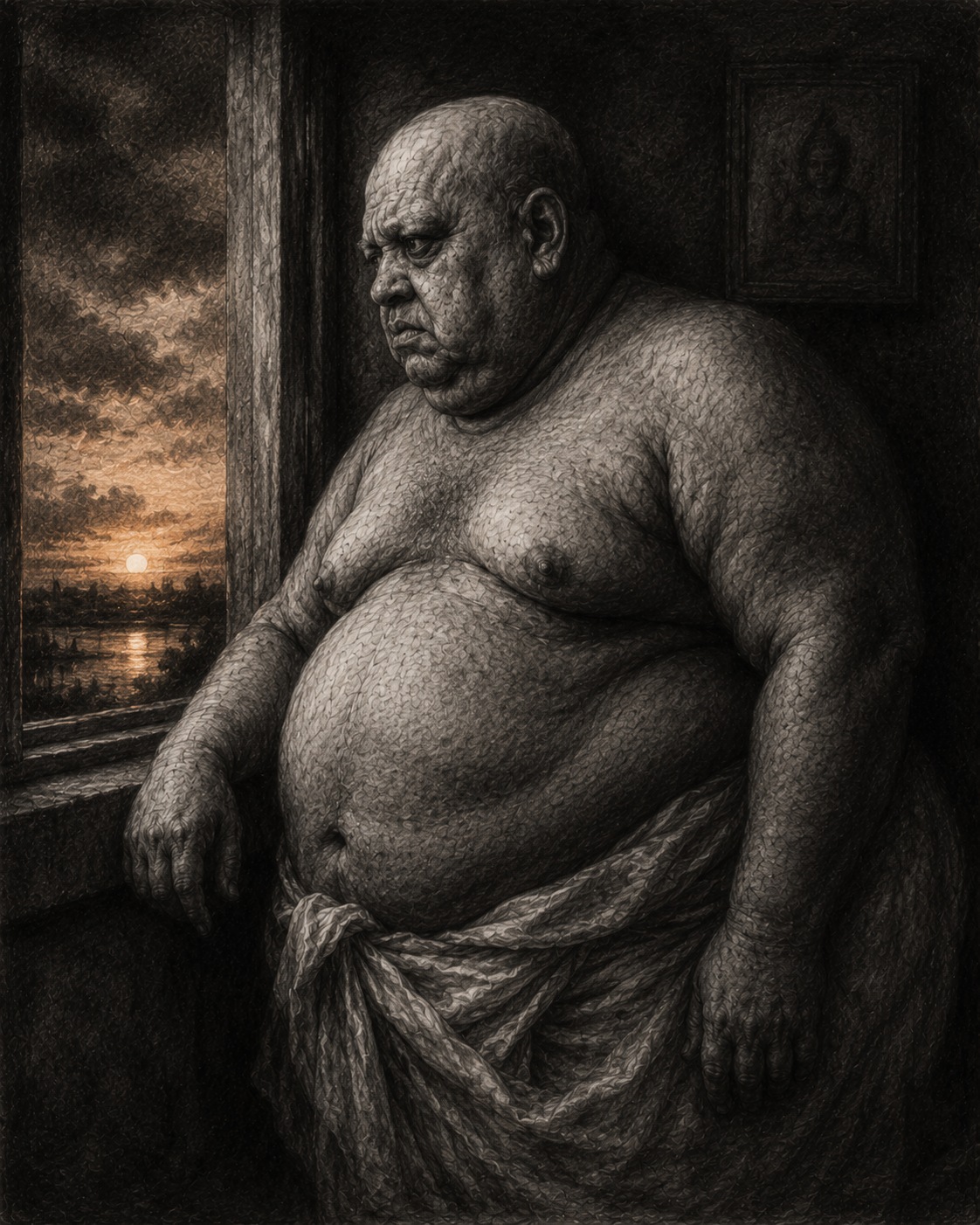
Acronyms used in this post:
Healthcare IT — Healthcare Information Technology, the use of software, databases, networks, and standards to run clinical and administrative medicine.
HL7 — Health Level Seven, a family of standards used to exchange healthcare data between systems.
FHIR — Fast Healthcare Interoperability Resources, a newer healthcare data exchange standard that breaks information into modular resources.
SQL — Structured Query Language, the language used to ask questions of relational databases.
NIH — National Institutes of Health, the major biomedical research agency in the United States.
VA — Veterans Affairs, the United States federal healthcare system for veterans.
The tea had gone cold in the cup and made that oily brown municipal skin on top, the kind of skin you see on neglected ponds, old drains, and political promises after election season. I sat there looking at it as if ambition itself had boiled over sometime in 1998, boarded a Boeing 747 to America, worked sincerely for years under fluorescent lights, returned to Calcutta with degrees and back pain, and now lay floating in my cup like a drowned insect with postgraduate qualifications.
There was also a biscuit.
Not a heroic biscuit. Not a biscuit with destiny. One of those humidity-defeated biscuits that has absorbed half of Bengal’s monsoon history and become a small edible pensioner.
I picked it up.
It bent.
This is where I am now. Even the biscuit understands structural fatigue.
I have no ambition left. This is not drama. There is no violin, no rain, no woman in a white sari walking slowly through Howrah station fog while the hero stares nobly at a departing train. Nothing so cinematic. It is more like noticing that the old wall clock stopped last week but nobody cared because the room was already living inaccurately. The calendar is correct. The life is not.
The room smells faintly of yesterday’s dal, old cotton, and that damp Calcutta air which enters your house like a relative with no return ticket.
There was a time when I wanted things.
Everybody wants things when young because the body is then running a giant fraud scheme. Hormones arrive in the brain wearing cheap suits and carrying briefcases. Dopamine says, “Invest.” Testosterone says, “Prove.” Cortisol says, “Hurry.” Some gland in the back says, “This is your time.” Another says, “Buy shoes.” A third says, “One day someone will understand you.”
And because you are young, foolish, and still able to digest street food after midnight, you believe them.
You believe the road is open.
You believe effort and result are connected by a clean pipe.
You believe talent will be noticed, work will be paid, love will be returned, and society, though imperfect, is basically a poorly managed but repairable household.
Then slowly, very slowly, the pipe clogs.
Not all at once. That would at least have dignity.
It clogs with timing. Illness. Family need. Bad luck. Class. Heat. Toothache. Unpaid invoices. Other people’s stupidity. Your own mistakes. The small daily erosion of living in a country where even getting clean water sometimes feels like negotiating with a minor demon employed by the municipality.
People still ask, “What is your plan?”
Plan?
I have a rice cooker.
That is the plan.
Rice cooker, tea pan, one electric oven, one laptop, one chair, one bladder that has become increasingly socialist in its demands, and a ceiling fan that sounds personally disappointed in me. What more should a fifty-one-year-old man plan? Invade Persia? Launch a startup? Marry again and discover new forms of domestic paperwork? Become a motivational speaker and tell young Indians to believe in themselves while the power goes off in June and everyone sits sweating like fish in a government aquarium?
Ambition needs a future tense.
Not hope. Hope is cheap. Hope is sold everywhere in India like roadside momos, warm enough to tempt you, doubtful enough to punish you later.
Ambition is more expensive. Ambition requires belief that tomorrow will respond to today’s effort. It requires faith in a bridge between action and outcome. Not religious faith. I have none of that. I mean the everyday working belief that if you push, something moves.
But what if you push and only your shoulder hurts?
What if you work and the money does not come?
What if you know things, really know them, but knowledge in your environment becomes not an asset but a social irritation, like bringing a microscope to a family picnic and pointing out bacteria on the luchi?
That is the special Indian torture. Educated enough to see the scam. Poor enough to remain inside it.
Like being handed a torch and locked in a public toilet.
Now you can see everything.
The walls. The leak. The stain. The engineering failure. The civic philosophy of the smell.
Excellent.
Still locked.
I had my years. America, Healthcare IT, databases, clinical trials, HL7, FHIR, SQL, NIH, VA, meetings, standards, data, long corridors, serious people, conference rooms where bad coffee was treated as an institutional right. I worked. I learned. I built things. I fixed broken things. I sat before screens with the patience of a monk and the posture of a collapsed umbrella.
Those acronyms once looked like ladder rungs.
Now, on bad days, they look like scratch marks on the inside of a well.
This is not to say the work was meaningless. That would be false, and I am too tired to lie properly. The work mattered. Patients are real. Data can save lives. Systems can fail in ways that hurt people. A clean interface, a correct mapping, a reliable database, a repaired pipeline — these are not toys. They are quiet forms of civic decency.
But a man can do meaningful work and still return home to meaningless evenings.
This is one of life’s smaller frauds. We are told meaning, once found, will spread like perfume through the whole house. It does not. Sometimes it stays in one locked cupboard and the rest of the house smells of damp socks.
Meanwhile the body continues.
That is the insult.
The ambition goes. The body remains. Gas forms. Teeth revolt. Hair migrates from useful places to absurd ones. The stomach becomes a trade union. Sleep becomes a negotiation. The brain, that overpraised walnut, keeps producing old memories at useless hours. A remark from 2007. A rejection from 2013. A woman’s shoulder seen in an auto twenty years ago. Some unpaid bill. Some unfinished plan. Some tiny humiliation that should have died but instead became a permanent tenant.
And then there is mother.
This is where the joke stops for a moment and stands outside the room, smoking quietly.
Sometimes I think I should end this whole circus. Then I think of Ma. Not as a sentimental poster mother, not as some cinema mother with backlighting and holy music, but as the actual old frail woman who must be kept well, taken to doctors, protected from the casual brutality of logistics. Wheelchair, attendant, transport, medicines, bills, calls, timing, heat, stairs, water, food. The ordinary military campaign of keeping an elderly parent alive in India.
People who have not done this think love is an emotion.
Love is also inventory.
Is there rice? Is there medicine? Is the phone charged? Is the doctor available? Is the lift working? Is the road flooded? Is the auto driver drunk? Is the money enough? Is she breathing properly? Did she eat?
This is not poetry. This is the spreadsheet of survival.
So I continue.
Not because I have rediscovered purpose in some grand philosophical sense. Please. I am Bengali, not a TED Talk in human form. I continue because she exists, and because for now my disappearance would not be an event, it would be an injury delivered to the one person I still cannot abandon.
After her, I do not know.
There it is. The dark sentence sitting in the corner like an unpaid landlord.
After her, what justifies me?
This is not a pleasant question. It does not come wearing perfume. It comes in the afternoon when the light is flat, when the tea has gone cold, when outside some man is shouting into a phone as if volume were evidence, when a pressure cooker whistles from another house and reminds you that civilization is mostly steam trapped in cheap metal.
What remains then?
Not greatness. Greatness looks exhausting now. Full of photographs, parasites, meetings, digestion trouble, and people using your name in rooms where you are not present.
Not fame. Fame is strangers entering your house through the keyhole.
Not admiration. Admiration is often resentment before it has ripened.
Not revenge. Revenge requires scheduling, and frankly I am behind on laundry.
I want smaller things.
Fewer phone calls.
Clean water.
A tooth that does not announce itself like an unpaid contractor.
Tea hot enough to deceive me for ten minutes.
A day without dread opening its browser tab before I do.
These are not ambitions. They are maintenance requests submitted to a universe with no help desk.
Maybe this is what middle age is. Not wisdom. Not death. Not peace. Just the slow administrative closure of unnecessary departments. Romance department, half staff. Career conquest department, shutter down. National pride department, under investigation. Spirituality department, exposed as a real estate scheme with incense. Masculinity department, mostly gas and blood pressure. Hope department, operating from a temporary shed beside a drain.
And still, life keeps making its small claims.
The kettle must be washed.
The rice must be cooked.
Ma must be called.
The fan must be repaired before June becomes a wet punishment from the sky.
The biscuit must be eaten before it becomes sociology.
Physics has a word for systems running down: entropy. It means order leaking away. Heat spreading. Structure loosening. Tea cooling. Money thinning. Skin sagging. Memory scattering. Ambition, too, is a kind of order. It gathers your energies and points them in one direction like schoolchildren in a morning assembly.
Then life opens the gate.
Mosquitoes enter. Debt enters. Illness enters. Relatives enter. History enters wearing muddy slippers.
Soon the neat assembly becomes boys running in every direction.
And one day you are not ambitious anymore.
You are just awake.
Awake and irritated.
Awake and responsible.
Awake because someone still needs you to be.
The biscuit finally broke when I dipped it. A wet beige corpse sank into the tea. I watched it go down with more attention than I have given to some major life decisions.
Then I drank the tea anyway.
Ambition may die, but cheapness survives. So does duty. So does the ridiculous body. So does the next morning, arriving without invitation, carrying its little tray of heat, noise, bills, tea, fear, and one more reason to remain.